C/ Namilla n71B, 24121 Sariegos, León - Spain
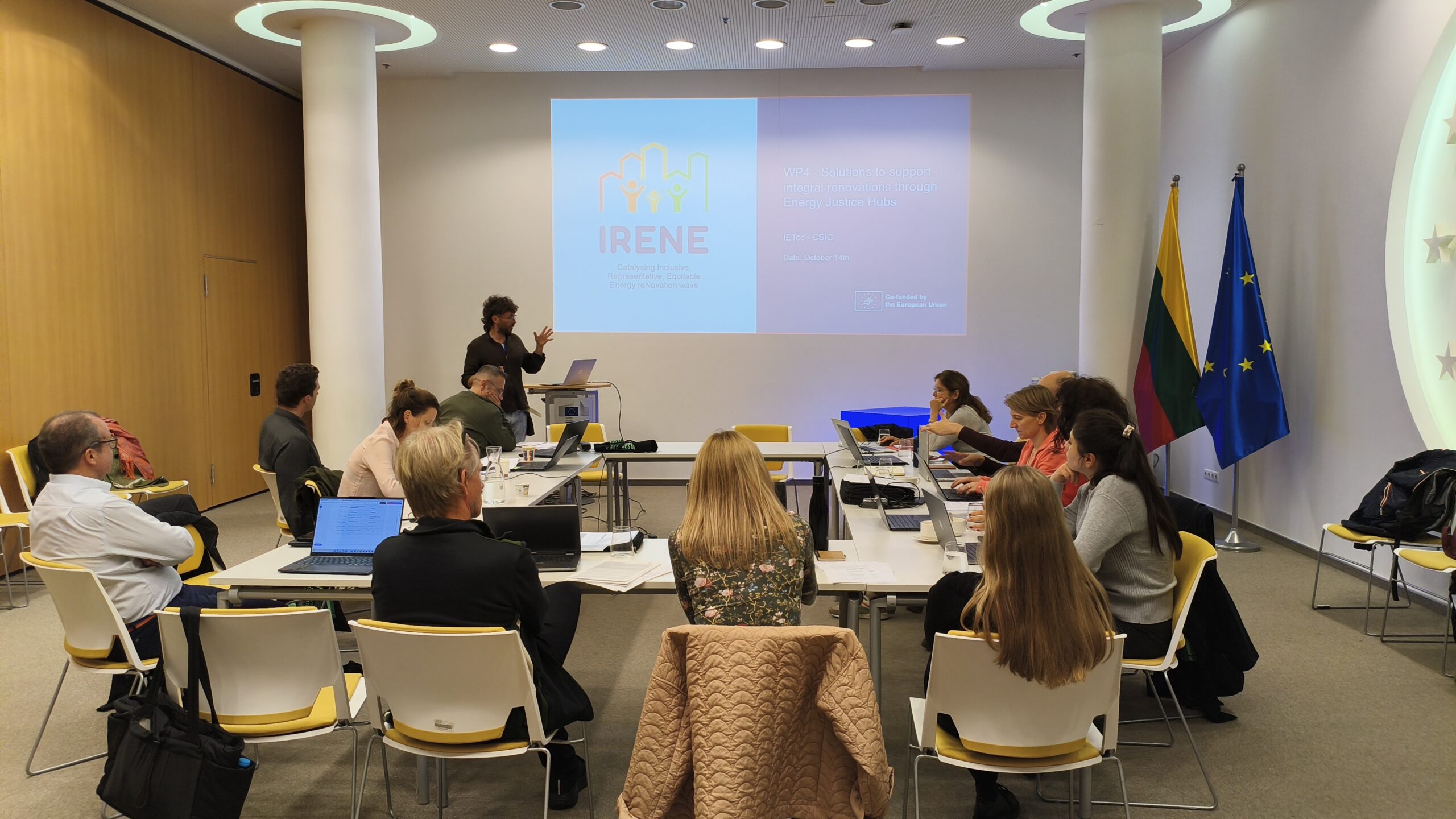
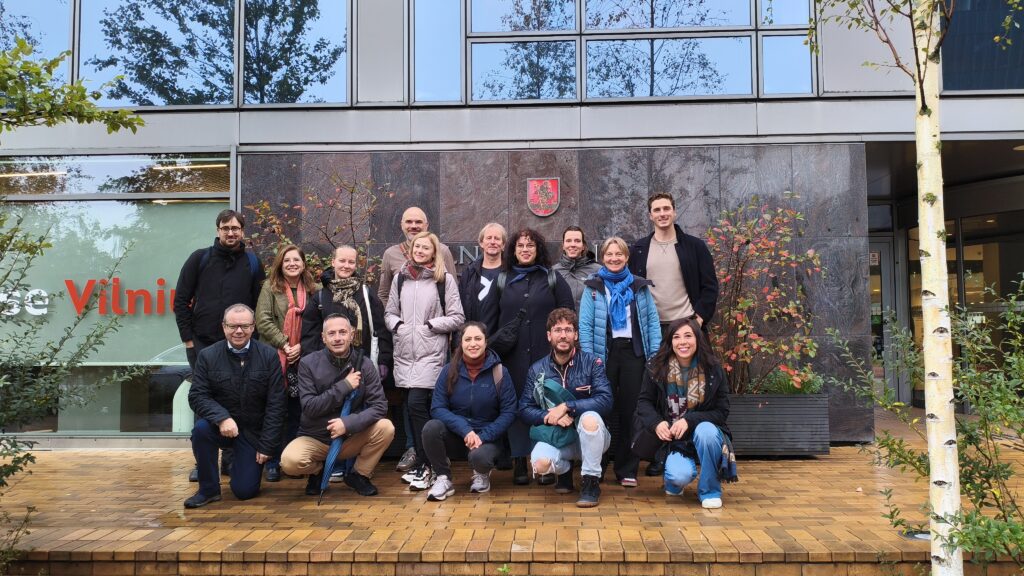
Amiestas hosted the ten partners of the EU-funded IRENE project in Vilnius on 14–15 October
The meeting gave the consortium the opportunity to review progress and exchange experiences from the four pilot cities—Vilnius, Vilvoorde, Leuven, and Madrid
From knowledge to action
Hosted by Amiestas at the European Commission Representation in Lithuania, the meeting opened with a review of progress across the project’s work packages. Across the IRENE pilots (Vilnius, Vilvoorde, Leuven, and Madrid), households face both structural barriers, including affordability, limited tenant influence over renovation decisions and collective decision-making, and knowledge gaps that prevent them from acting on renovation opportunities, such as difficulties understanding contracts and available financial support schemes. Vulnerable groups—tenants, older or digitally excluded residents, and non-native speakers—face the greatest challenges. Therefore, One-Stop Shops require targeted outreach and impact measurement strategies. Although all pilots face common issues, each city’s governance model and local conditions shape where gaps concentrate and who is hardest to reach.
“The central knowledge gap is not a lack of information alone. It is the capacity to turn information into trusted, case-specific action,” Global Factor
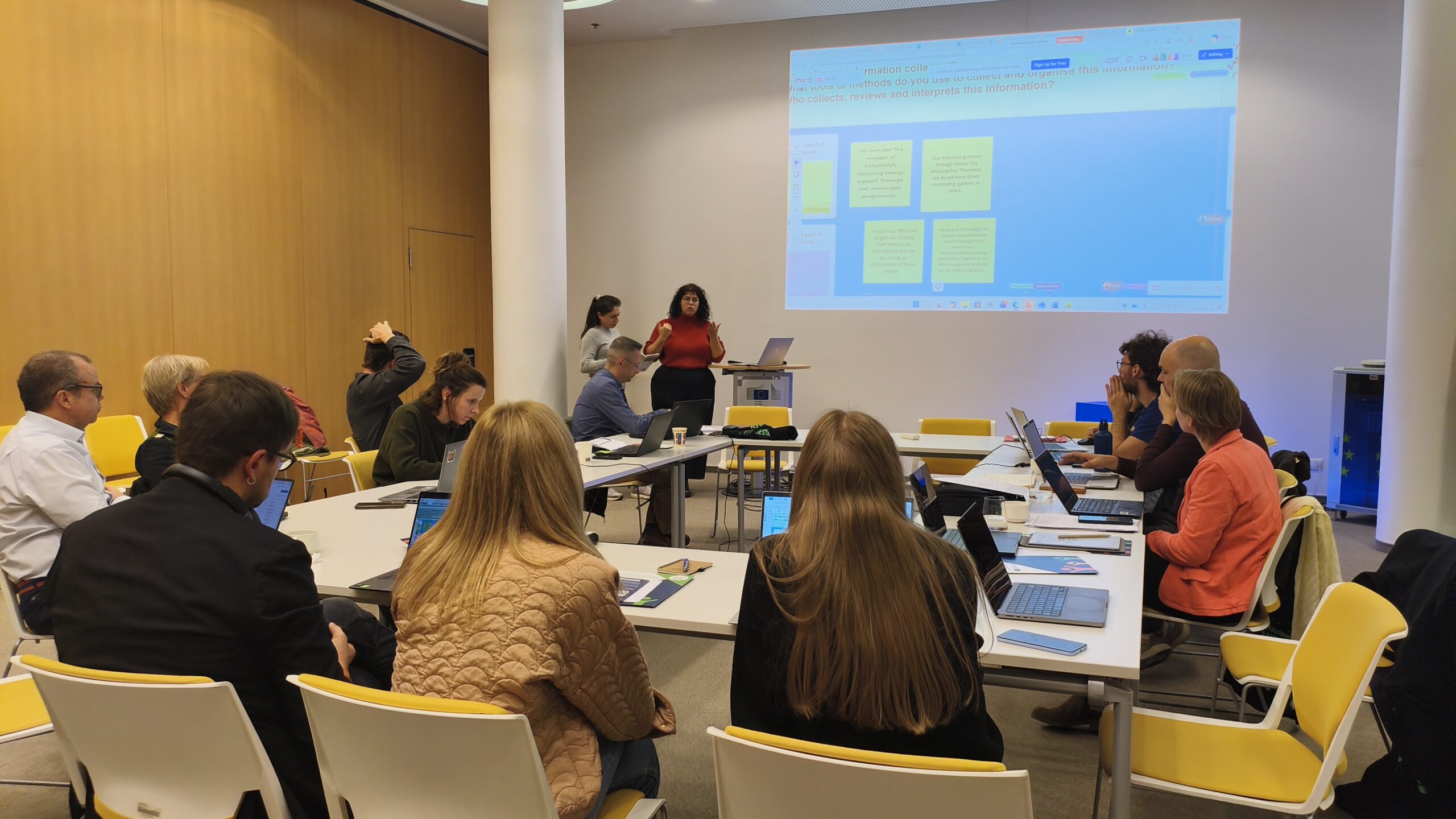
The project also reviewed the progress establishing Energy Justice Hubs, giving partners an opportunity to discuss their development and share perspectives on how these structures can support the project’s objectives. TU Delft led a dedicated workshop to identify and map energy poverty indicators, giving partners space to reflect on different monitoring practices and decision-making processes.
The agenda also covered project coordination, updated communication materials and potential scientific publications, alongside preparations for upcoming deliverables and milestones.
Learning from renovation in Vilnius
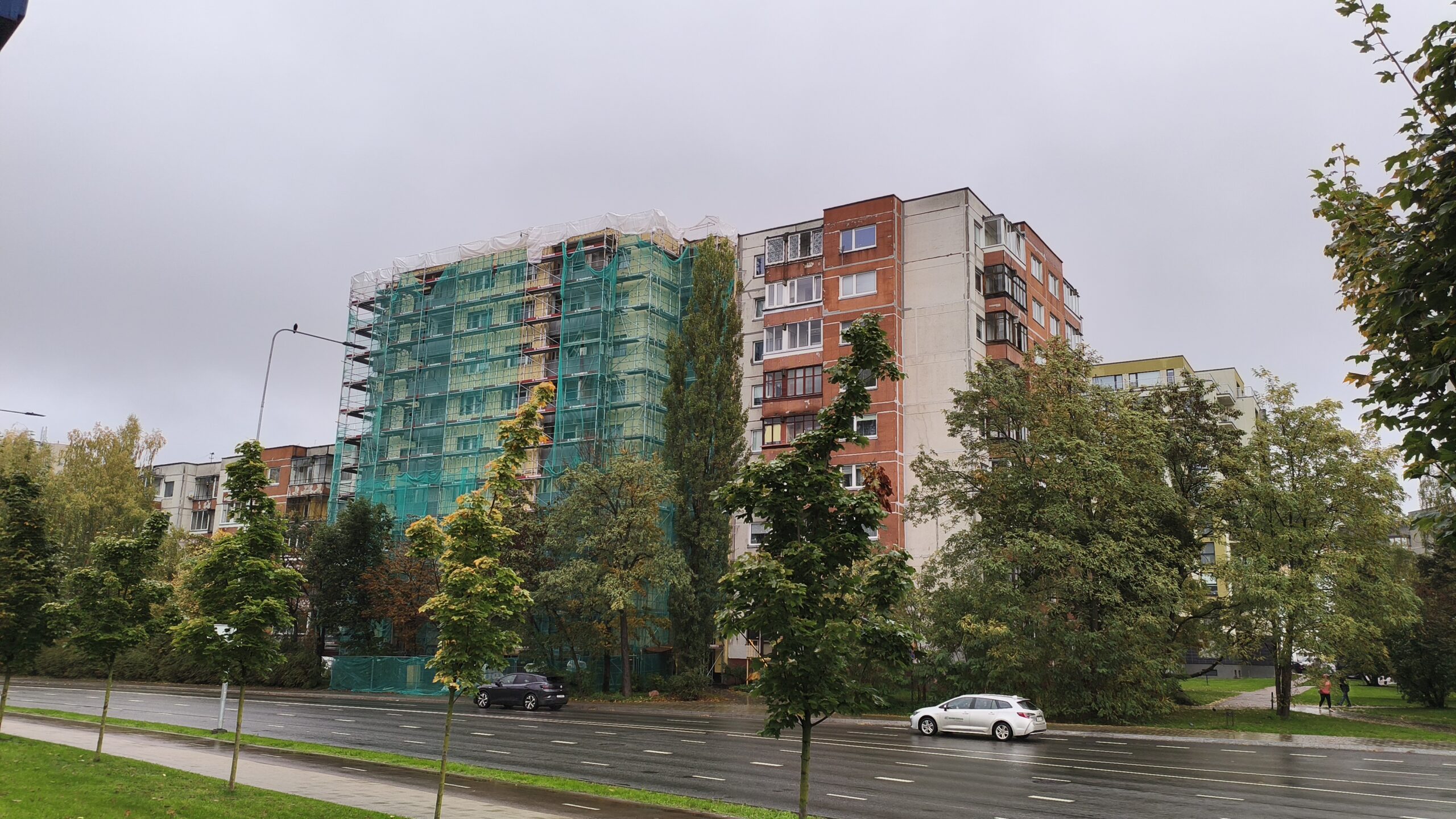
The meeting also offered partners first-hand insight into Lithuania’s approach to residential renovation. Amiestas presented the organisation’s evolution since its foundation and shared the municipality’s current ambitious strategy, which aims to renovate 4,500 buildings over the coming years. The consortium also learned how Lithuania supports home renovation through state subsidies and bank credits. Challenges in the one-stop shop journey include citizen concerns, communication barriers, and market-related obstacles. Amiestas shared successful engagement practices that have helped reach households, including working with active community leaders, providing local support, building strong municipal teams, and adapting logistics to meet residents when they are at home. Since 2025, renovation efforts in Vilnius have reduced annual CO₂ emissions by 770.81 kg and saved 4,262.25 kWh/(m²/year) in energy consumption.
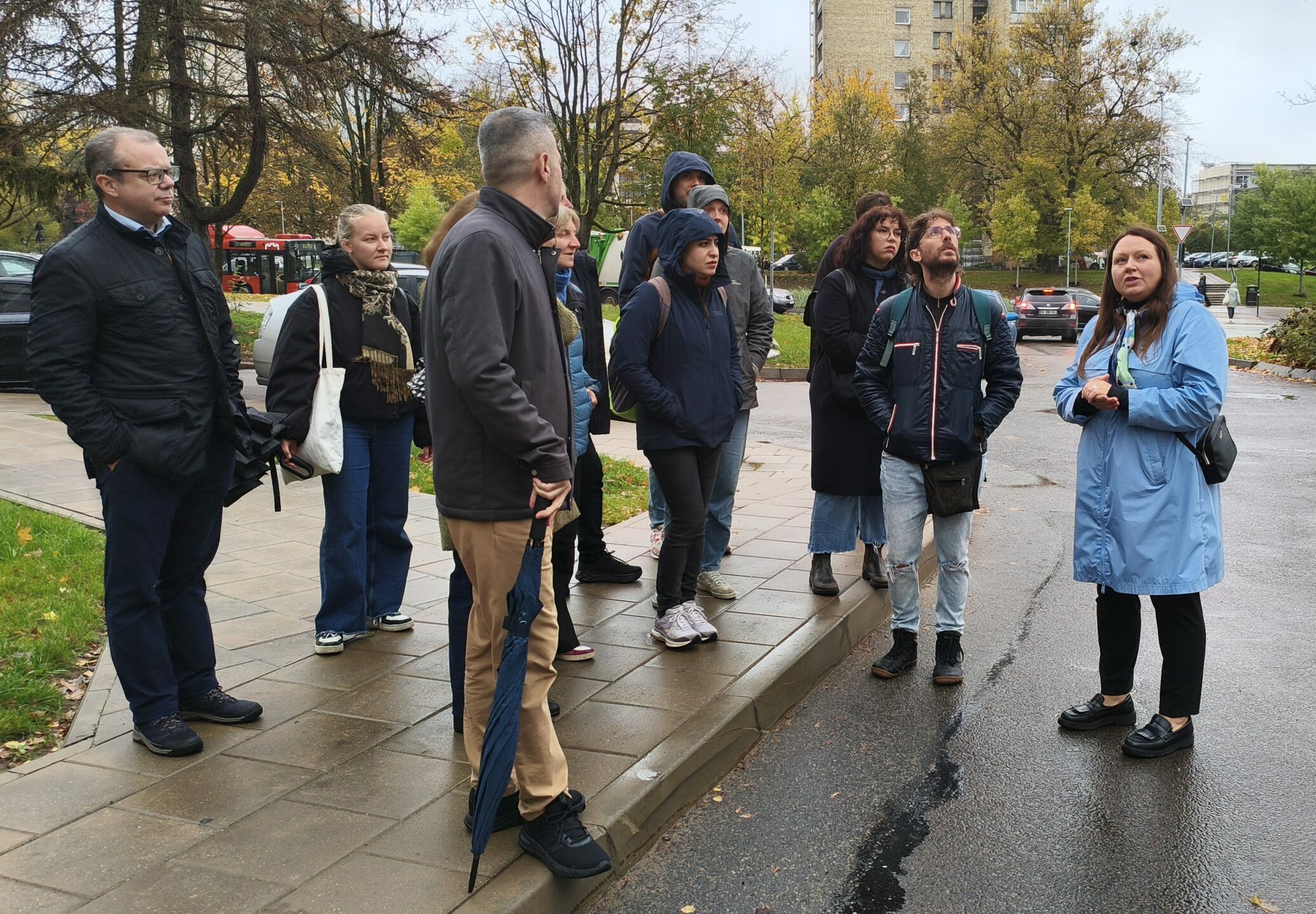
The study visit to renovated multi-apartment buildings in Vilnius gave the consortium an opportunity to explore local renovation examples and engage with the realities of transforming existing residential buildings. During the tour, one resident welcomed the group into the building’s renovated indoor common areas and explained how the renovations had improved home comfort and nearly halved her energy costs. Other benefits of renovation include improved health, safety, and building appearance; increased property value; stronger community ties; and a positive environmental impact.
By bringing project partners together for strategic discussions and on-the-ground learning, the Vilnius consortium meeting strengthened cooperation and supported the continued implementation of IRENE’s activities across its pilot contexts.
Press Contact
Email: infoirene@globalfactor.com
Website: https://www.helpeu.eu/irene
Follow IRENE on social media
This project has received funding from the European Union’s LIFE Programme under Grant Agreement No. LIFE24-CET-IRENE/101215481. Views and opinions expressed are however those of the author(s) only and do not necessarily reflect those of the European Union or CINEA. Neither the European Union nor the granting authority can be held responsible for them.
To provide the best experiences, we use technologies such as cookies to store and/or access device information. Consent to these technologies will allow us to process data such as browsing behaviour or unique identifiers on this site. Not consenting or withdrawing consent may adversely affect certain features and functions.