
C/ Namilla n71B, 24121 Sariegos, León - Spain
An academic study published in the scientific journal Buildings and partially funded through the European project IRENE (Catalysing Inclusive, Representative, Equitable Energy reNovation wavE) warns that public subsidies for energy renovation—designed to advance the energy transition and expected to help combat energy poverty—can have adverse social effects if they are not properly coordinated with tax and social protection systems.
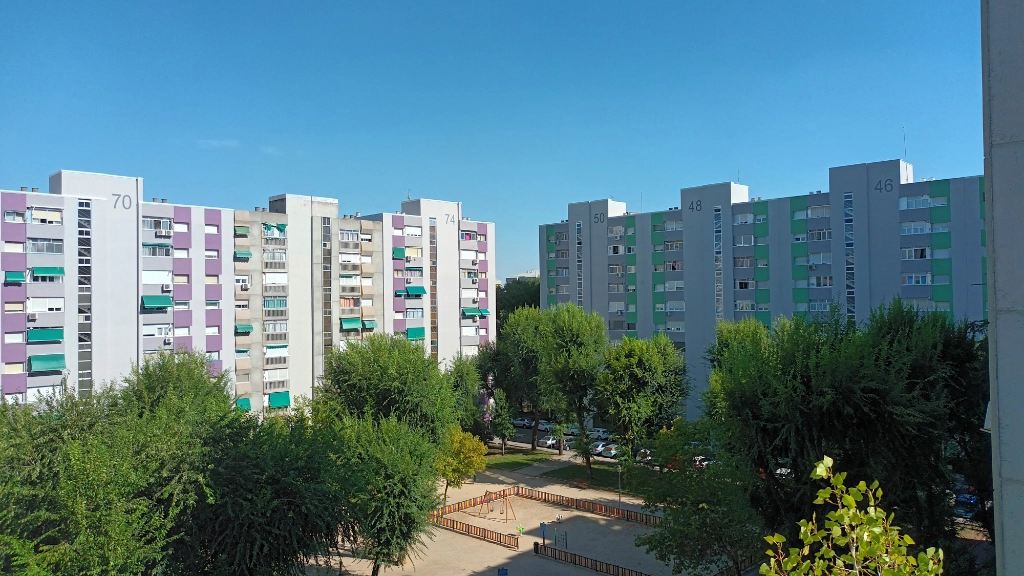
The study analyses the case of the Poblado Dirigido de Orcasitas, in the south of Madrid, one of the city’s most ambitious urban renovation processes and considered an example at the European level of citizen‑driven energy regeneration. The research shows that families officially recognised as vulnerable lose, on average, nearly 50% of the aid received due to the taxation of subsidies and the withdrawal of social benefits linked to income. The study is based on a detailed analysis of 22 documented cases of pensioners receiving minimum pension supplements and beneficiaries of the Minimum Vital Income who, after receiving support to improve the energy efficiency of their homes, were issued repayment claims by Social Security.
The main cause is the tax classification of renovation subsidies as capital gains under the personal income tax (IRPF). This one‑off increase in income automatically activates reviews in social benefit systems, which are designed to assess recurring income rather than extraordinary aid intended to improve housing conditions. As a result, many residents have had to repay minimum pension supplements, lose entitlement to benefits such as the Minimum Vital Income, and see other support linked to their vulnerable status withdrawn. The impact goes beyond taxation. In several cases, additional losses of social benefits have been detected, such as the electricity and heating social tariffs, dependency support, discounts on medicines, or assistance for elderly care services. These consequences can cancel out the social and energy benefits of renovation and even reintroduce situations of energy poverty in households that had already improved the thermal performance of their buildings.
The problem does not lie in the renovation itself—which has achieved significant reductions in energy consumption and improvements in comfort—but in the lack of coherence between housing, tax, and social protection policies. In this regard, the article highlights that legal solutions already exist in Spain and could be extended to vulnerable groups, such as the tax exemption applied to renovation subsidies financed with Next Generation EU funds, or the regulations in the Basque Country, which exclude these subsidies from income calculations for certain benefits.
Looking ahead, the study warns that implementing mandatory minimum energy performance standards under the EU Energy Performance of Buildings Directive—particularly prioritising the renovation of the least efficient buildings first—could amplify these negative effects if preventive measures are not adopted. The authors conclude that a just energy transition requires not only ambitious investment but also institutional coherence, to ensure that no vulnerable person is penalised for improving the efficiency and habitability of their home.
Authors: Fernando Martín-Consuegra (CSIC), Iñigo Antepara (University of the Basque Country), and Manuela Navarro (Asociación Vecinal Guetaria)
Reference:
Martín-Consuegra, F., Antepara, I., & Navarro, M. (2026). Unveiling the Adverse Impact of Spanish Building Refurbishment Subsidy Taxation on Low-Income Recipients—A Case Study of the Renovation of P. D. Orcasitas. Buildings, 16(8), 1577. https://doi.org/10.3390/buildings16081577
Press Contact
Email: infoirene@globalfactor.com
Website: https://www.helpeu.eu/irene
Follow IRENE on social media
This project has received funding from the European Union’s LIFE Programme under Grant Agreement No. LIFE24-CET-IRENE/101215481. Views and opinions expressed are however those of the author(s) only and do not necessarily reflect those of the European Union or CINEA. Neither the European Union nor the granting authority can be held responsible for them.
To provide the best experiences, we use technologies such as cookies to store and/or access device information. Consent to these technologies will allow us to process data such as browsing behaviour or unique identifiers on this site. Not consenting or withdrawing consent may adversely affect certain features and functions.